Kinexus Services Map
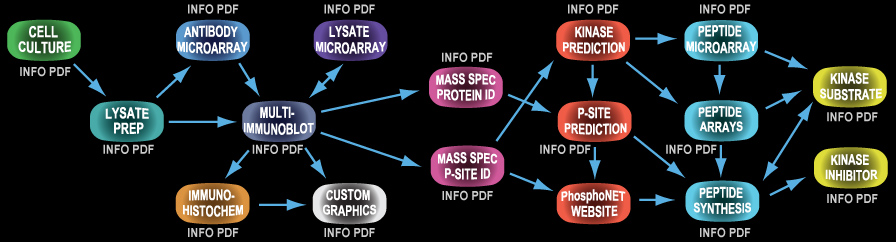
Click on button to open a webpage with more information
Click INFO PDF to download a Customer Info Package
Welcome to the Kinexus Web Site
Celebrating Over 20 Years of Innovation and Exploration
Over 2000 laboratories in over 40 countries have benefited from our highly integrated platform of proteomics and bioinformatics services. Our unique services and products are convenient, cost-effective, insightful and enabling for identification and validation of biomarkers, drug targets and therapeutic compounds. Put our discovery engine to work for you.
What's New
Kinexus now offers two different Kinex™ KAM antibody microarray services that utilize complementary antibody microarray chips. Our new KAM-1325 antibody microarray features 875 phosphosite-specific antibodies (for phosphorylation) and 451 pan-specific antibodies (for expression levels of these phosphoproteins). The KAM-1325 microarray can also be used for tracking wide-spread changes in protein-tyrosine phosphorylation in combination with our PYK generic anti-phosphotyrosine antibody (Cat. No. AB-PG001). The KAM-1150 antibody microarray uses approximately 1150 pan-specific antibodies. When used together, the KAM-1325 and KAM-1100 chips permit screening of cell and tissue lysates with over 2000 non-redundant antibodies for 700 different protein targets. Our sample chemical cleavage protocols now provide better preservation of protein phosphorylation and stabilizes cell/tissue lysate preparations so that they do not require refrigeration or freezing during shipping to Kinexus. The Kinex™ KAM-1325 Antibody Microarray is also available for sale as a stand-alone product or with supporting reagents in kits. Not only does our Antibody Microarray Kit track a broader range of protein kinases and protein phosphatases than our competition, but it offers the best value, reliability and follow-up opportunities in the market today (see our Competitor Analysis). Kinex™ KAM-1325 Reports now include extensive antibody and protein target information and direct links to over 200 downloadable Kinections signalling pathway maps and our on-line SigNET Knowledgebase. Furthermore, we also can provide custom KiNetscape protein kinase network maps that show the lead changes in protein expression and phosphorylation as revealed through our microarray and immunoblotting analyses.
Below are just some of the reasons why you should try this powerful and affordable discovery strategy now. Click here to download more information about our affordable do-it-yourself Kinex™ KAM-1325 Antibody Microarray Kits.
- Convenience - Just send us your frozen biological specimens by courier. Chemically cleaved lysates can be shipped without the need for refrigeration or freezing.
- Super Sensitivity - No sample enrichment required. Uses 25-100 µg of crude cell or tissue lysate protein. Lysate proteins are biotinylated, and then detected following capture on the antibody microarray with fluorescently-labelled anti-biotin antibody. Dynamic range of detection can be greater than 8,000-fold.
- Wide Coverage - KAM-1325 tracks hundreds of cell signalling proteins with over 1325 in-house validated, commercial antibodies (~875 phosphosite-specific and ~451 pan-specific for 627 unique target proteins. KAM-1150 uses approximately 1150 pan-specific antibodies. Both microarrays support tracking expression or covalent modifications such as tyrosine phosphorylation.
- Independently Validated Antibodies - Cherry-picked from over 6000 sourced from over 26 vendors with about 60% developed by and available directly from Kinexus.
- Reduced False Positives - Optional proprietary chemical cleavage of sample proteins lowers the risk of false positives from protein-protein interactions, normalizes signals from large differences in target protein size, and reduces internal competition of capture antibodies for the same protein targets.
- Improved Surface Chemistry and Printing - With capture antibodies now printed with better morphology and consistency on 3D matrix-coated glass slides (KAM-1325) or expoxy-coated glass slides (KAM-1150).
- Single Dye, Non-competitive Methodology - Two samples are subjected to the same labelling procedures and incubated separately on the same slide to eliminate differential protein-dye binding problems. Furthermore, slight differences in lysate protein loading and labelling are compensated for by global normalization with our software during analysis.
- High Reproducibility - Duplicate measurements are provided in detailed MS-Excel reports with further data analyses with the KAM-1325 service (Median error range of ~7-8%). Quadruplicate measurements with the KAM-1150 service (Median error range of ~12-14%). Average of duplicate measurements of the same sample on different chips have a median error range of ~8%.
- Inexpensive Validation – Kinetworks™ Immunoblotting Services available to confirm top 18 hits from our antibody microarray. Other additional enabling, follow-up services are also available. Over 60% of the antibodies on our microarrays are directly available from Kinexus for $89 per 25 µg of affinity-purified rabbit polyclonal antibody.
- Well Tested - Over 5000 antibody microarray analyses performed to date. Open access in KiNET-AM to full experimental data from over 2000 analyses available online for comparisons.
- Well Proven - Over 200 scientific peer-reviewed papers published using our antibody microarrays.
Kinexus now features over 1300 different antibodies, 1600 different peptides and 60 different cell and tissues lysates on our Products Website. Over 600 phosphosite-specific antibodies are available, and these provide coverage for over 5000 phosphorylation sites. Our well characterized affinity-purified antibodies are typically priced at US$89 per 25 µg, and blocking peptides are available for most of these products for as little as $US39 per 200 µg. Several hundred diverse peptides are also available as protein kinase substrates and phosphatase substrates. Regularly check our Products Website over the coming months to see the latest product releases or get on our e-mailing list to stay informed quarterly about our services and products.
Open-access SigNET KnowledgeBank has Grown to Include More Websites
Kinexus has added new capabilities and updates to several of our existing free access, on-line knowledgebases and posted some new ones. Direct links to all of these websites are provided at the bottom of this webpage.
PhosphoNET features detailed information on over 177,000 known and over 785,000 predicted phosphorylation sites in over 20,000 human proteins, including their evolutionary analysis in up to 22 other species. Our proprietary Kinase Predictor algorithm has also identified the top 10% of 492 human protein kinase domains that best match each of these known and putative human phosphosites. Kinase-substrate predictions can be further tested with our In Vitro Kinase and Phosphopeptide Testing (IKPT) Services. Our new PhosphoSite-Match Module reveals highly related known and potential phosphosites in human proteins.
KinaseNET contains detailed information on the structures, distribution, evolutionary conservation, regulation, substrate targets, drug inhibitors, and disease associations of 636 protein kinases found in the human kinome. This website now also provides over 220 Kinections Maps that are downloadable in MS-PowerPoint format.
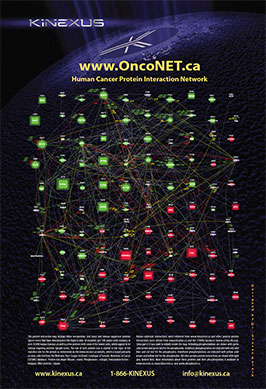
OncoNET is a new cancer protein-related knowledgebase with data on the expression levels and mutations in about 3000 human proteins that are linked to cancer in diverse tissues and tumour cell lines. Queries can be made starting with proteins or cancers of interest.
DrugKiNET documents the interactions or lack thereof of over 100,000 protein kinase-drug combinations and predicts another 200,000 interactions with detailed information on over 850 compounds. This website now also features detailed information on the interactions of specific atoms on kinases and compounds from interrogation of over 2200 3D crystal structures of protein kinases with drugs.
KinATLAS is a brand-new website that takes the data in our TranscriptoNET website and data originally retrieved from primarily the EMBL STRING database to create protein-protein interaction network maps that are tissue or cell-specific, and it serves as a portal to more detailed information on these proteins in SigNET and other websites. It also utilizes our DrugKiNET website to display maps of known and predicted protein kinase-drug interactions. KinATLAS can help identify new kinase targets for existing drugs, which can be further tested with our In Vitro Kinase-Inhibitor Activity Profiling (KICP) Services.
PhosphoNET features detailed information on over 177,000 known and over 785,000 predicted phosphorylation sites in over 20,000 human proteins, including their evolutionary analysis in up to 22 other species. Our proprietary Kinase Predictor algorithm has also identified the top 10% of 492 human protein kinase domains that best match each of these known and putative human phosphosites. Kinase-substrate predictions can be further tested with our In Vitro Kinase and Phosphopeptide Testing (IKPT) Services. Our new PhosphoSite-Match Module reveals highly related known and potential phosphosites in human proteins.
KinaseNET contains detailed information on the structures, distribution, evolutionary conservation, regulation, substrate targets, drug inhibitors, and disease associations of 636 protein kinases found in the human kinome. This website now also provides over 220 Kinections Maps that are downloadable in MS-PowerPoint format.
OncoNET is a new cancer protein-related knowledgebase with data on the expression levels and mutations in about 3000 human proteins that are linked to cancer in diverse tissues and tumour cell lines. Queries can be made starting with proteins or cancers of interest.
DrugKiNET documents the interactions or lack thereof of over 100,000 protein kinase-drug combinations and predicts another 200,000 interactions with detailed information on over 850 compounds. This website now also features detailed information on the interactions of specific atoms on kinases and compounds from interrogation of over 2200 3D crystal structures of protein kinases with drugs.
KinATLAS is a brand-new website that takes the data in our TranscriptoNET website and data originally retrieved from primarily the EMBL STRING database to create protein-protein interaction network maps that are tissue or cell-specific, and it serves as a portal to more detailed information on these proteins in SigNET and other websites. It also utilizes our DrugKiNET website to display maps of known and predicted protein kinase-drug interactions. KinATLAS can help identify new kinase targets for existing drugs, which can be further tested with our In Vitro Kinase-Inhibitor Activity Profiling (KICP) Services.
Direct Links to Free Kinexus Databases and Knowledgebases









Kinexus Products Map
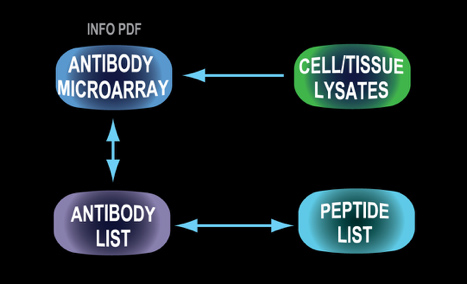
Download our Customer Information Packages
Download an overview presentation about the Kinexus proteomics services